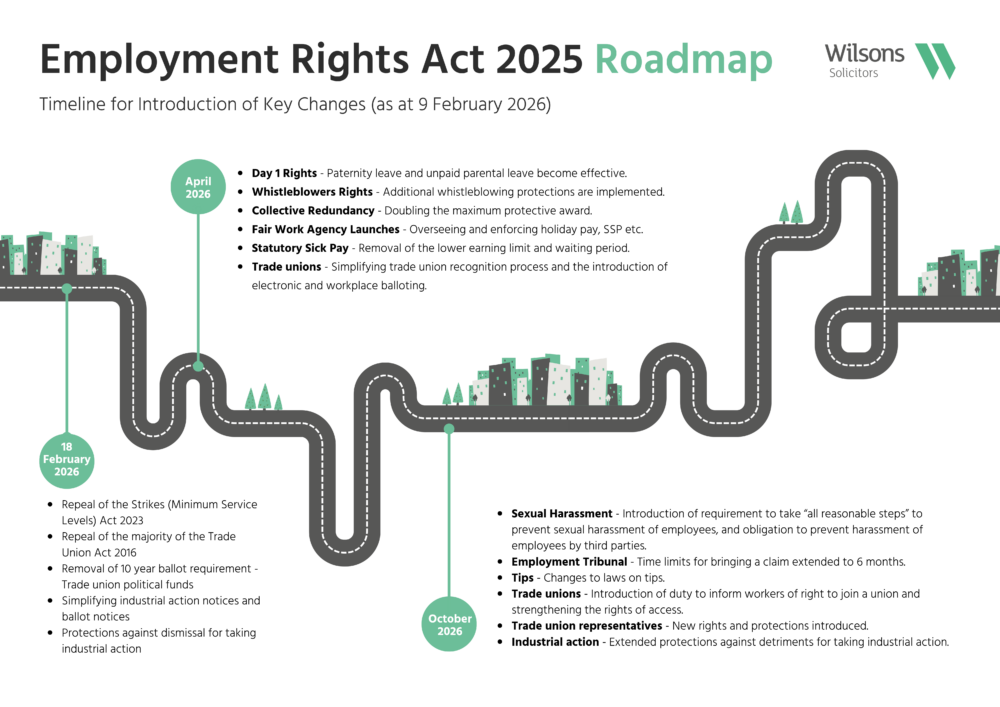
What is changing and when?
Ordinary unfair dismissal – qualifying period
From 1 January 2027, the qualifying period for ordinary unfair dismissal protection will reduce from two years to six months. The Government have now confirmed that from that date, protection will apply immediately to employees who already have six months' service or more. The practical effect of this is that any employees who start on or after 1 July 2026 will gain protection once they reach six months' service.
Ordinary unfair dismissal – compensatory cap removed
The Government has also now confirmed it will remove the statutory cap on compensatory awards entirely for ordinary unfair dismissal from 1 January 2027. Previously, the maximum compensatory award that an employee could recover was capped at the lower of £118,223 or 52 weeks' gross pay.
The factsheet also states that the Government does not intend to consult further on these unfair dismissal provisions, despite contrary indications they gave to the House of Lords in December 2025.
Fire and rehire – delayed and aligned with unfair dismissal changes
The updated Government timetable lists "fire and rehire protections" as taking effect in January 2027, aligning them with the six-month qualifying period and uncapped unfair dismissal awards.
This is a shift from the original roadmap (published in July 2025), which indicated the fire and rehire measures would take effect in October 2026.
Consultations now open (and more to come)
Alongside the updated implementation timeline, the Government has also launched four consultations on how key elements of the Employment Rights Act 2025 will work in practice:
- Fire and rehire – This is a consultation on the scope of "restricted variations" (the core changes to contractual terms that an employee cannot be dismissed for should they not agree to) including how the regime should apply to contractual expenses and benefits and changes to shift patterns.
The consultation closes on 1 April 2026. - Trade Union recognition – A consultation on the revised Code of Practice and proposals on unfair practices in electronic ballots ahead of electronic voting coming into effect next year. The consultation closes on 1 April 2026.
- Tipping – A consultation on strengthening the law on tipping, including the new requirement to consult workers when developing or reviewing tipping policies and the requirement for employers to review their policy every 3 years. The consultation closes on 1 April 2026.
- Flexible working – This is a consultation on improving access to flexible working, including the proposed process employers must follow before rejecting a request.
The consultation closes on 30 April 2026.
The government has also indicated that it will shortly launch a further consultation on modernising the regulatory framework for the temporary recruitment sector, including regulation of umbrella companies.
Wider implementation picture
The press commentary has picked up that, in several areas, the updated timeline now uses "no earlier than" language rather than firm dates. For example, electronic and workplace balloting for statutory trade union ballots is now no earlier than August 2026 and employment tribunal time limit changes are listed as coming into force no earlier than October 2026.
The same timeline also confirms nearer-term milestones including:
- Repeal of most of the Trade Union Act 2016 from 18 February 2026
- Statutory Sick Pay reforms and day-one paternity/unpaid parental leave from 6 April 2026
- Establishment of the Fair Work Agency from 7 April 2026.